Each light is a note.
Every setup is a chord.
The companion site for NYC Salt's Advanced Studio Photography class — a growing exhibition of student work, and the reference shelf that goes with it, built session by session from September to May.
Light & Object
Sept 22–Nov 24 · 10 sessions Critique 1 · Nov 24Light & Person
Dec 1–Feb 23 · 11 sessions Critique 2 · Feb 23Light & Brief
Mar 2–Apr 20 · 7 sessions Critique 3 · Apr 20My Work
May 4–May 26 · 3 sessions + show Final exhibition · May 26The year moves in one direction — light technique, then a person, then a client, then full creative ownership. Each critique becomes the launching point for the next unit's opening question.
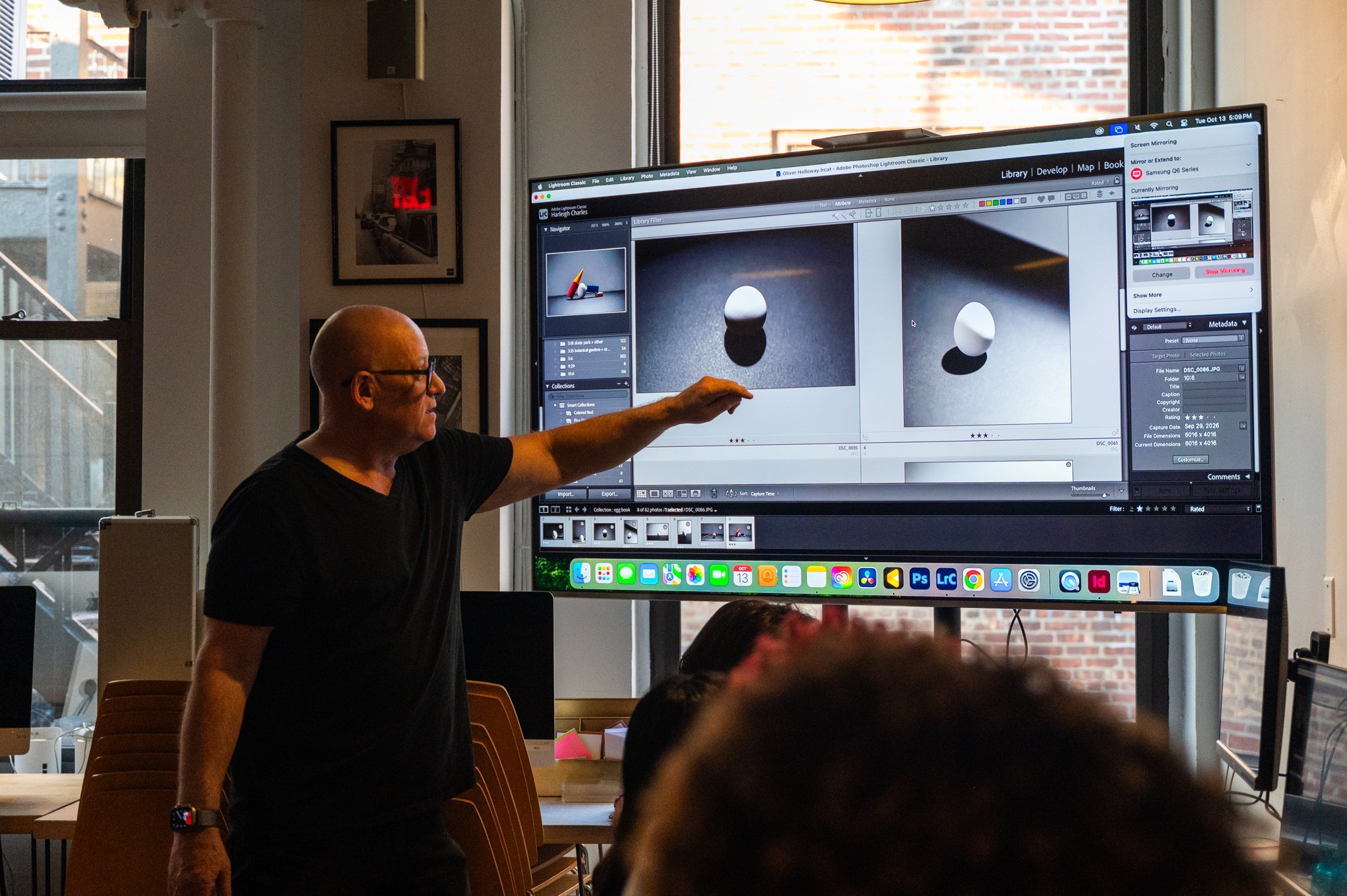
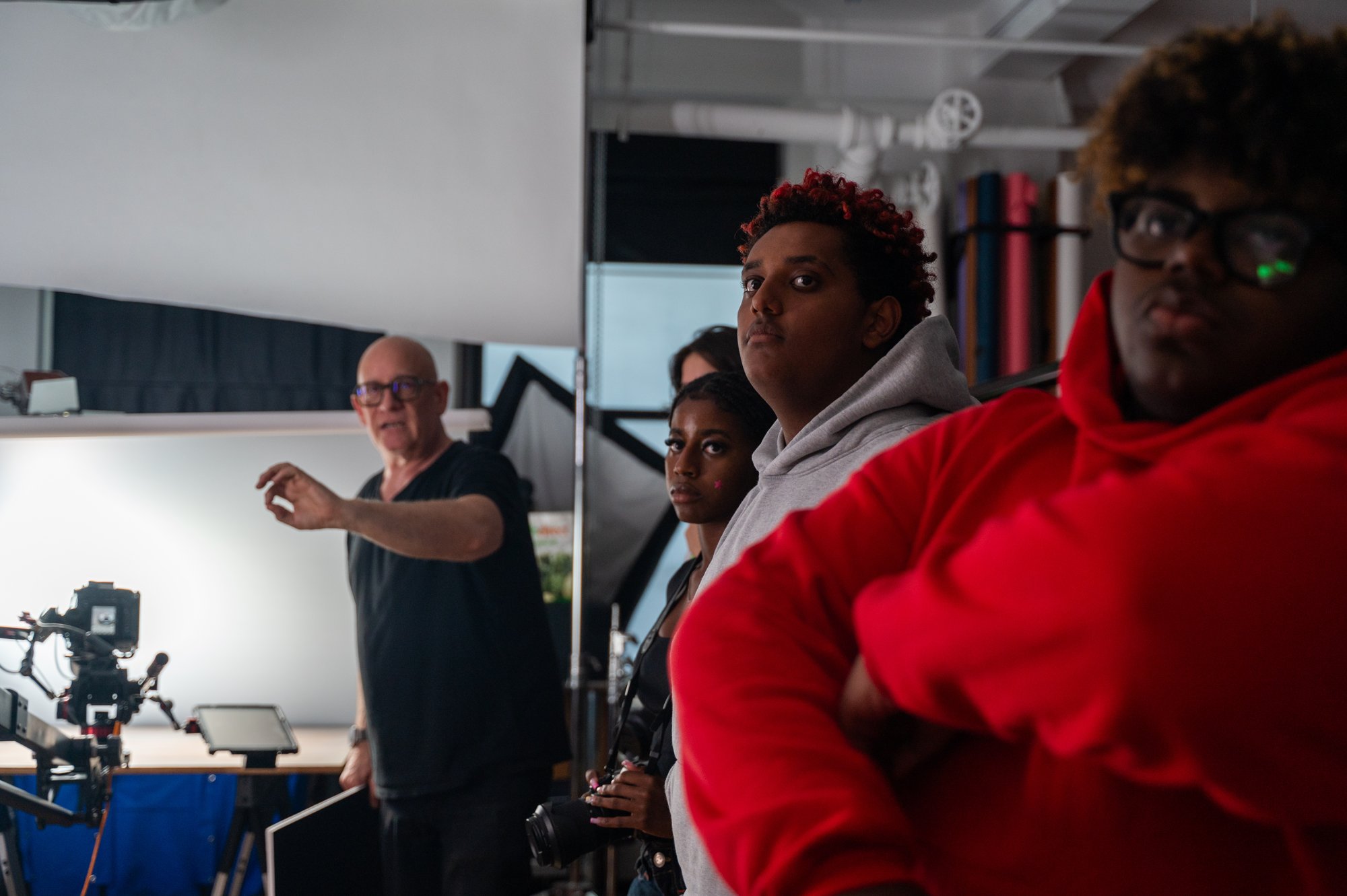
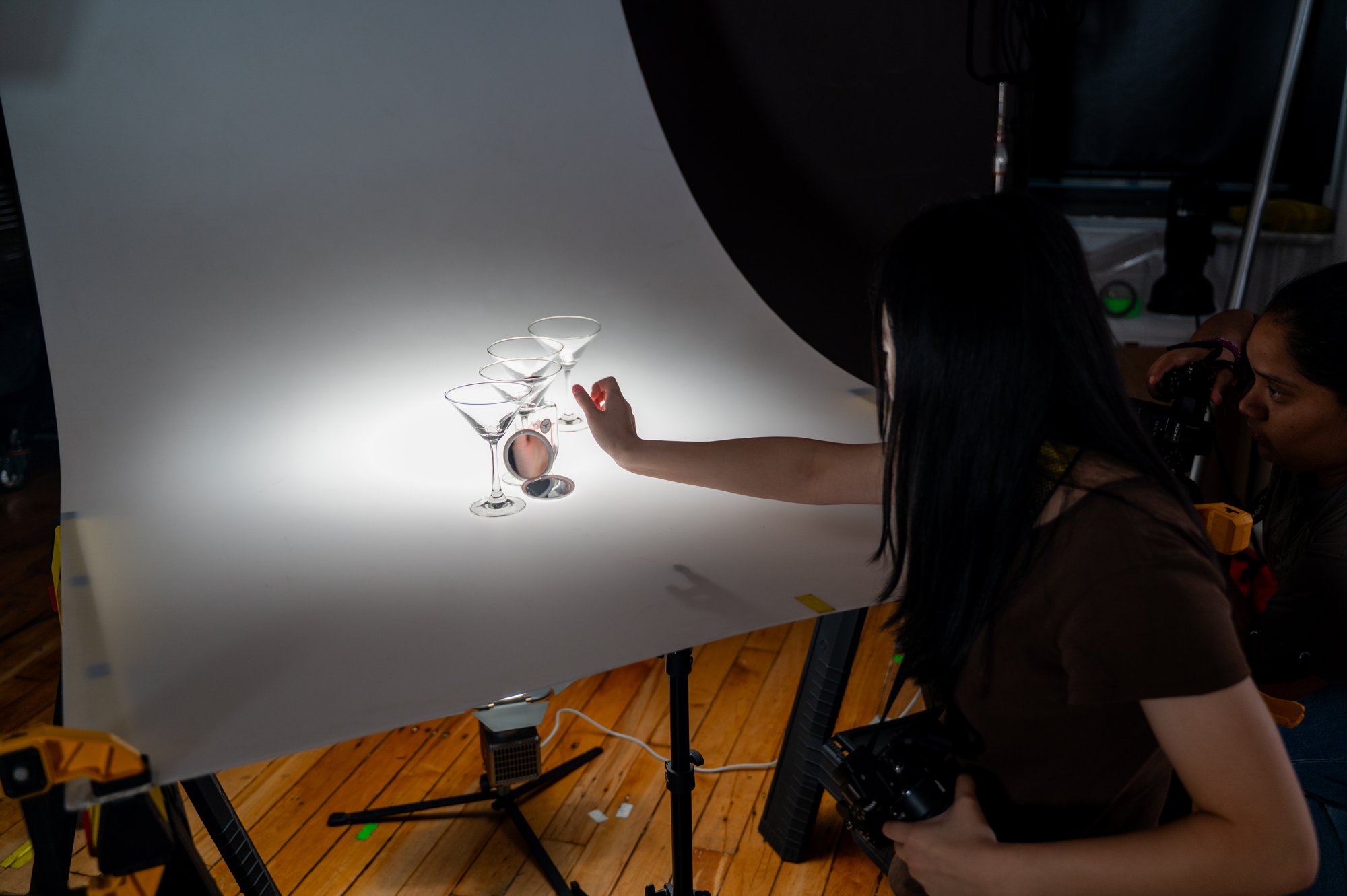
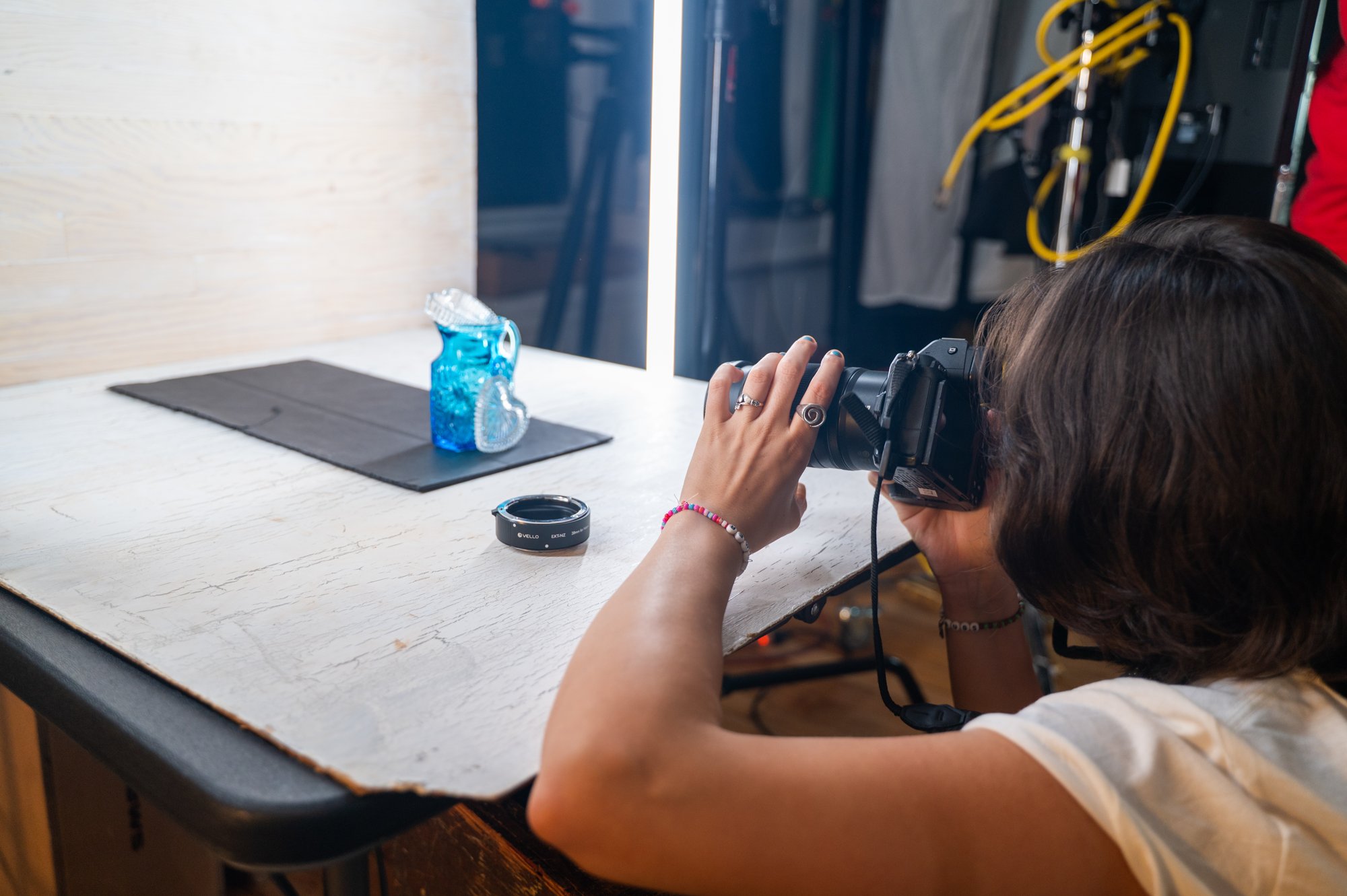
Still life is the class's first language of light — how quality, ratio, and direction change what an object says. It's built around three objects every student carries all year (camera, journal, book) and a technical arc that runs from a single softbox to reflective metal, transparent glass, and improvised location lighting. The unit closes with a first shoot and a reshoot presented side by side at Critique 1, so the gap between them becomes the actual lesson.
With the technical vocabulary from Unit 1 in place, the subject becomes a person — a directed portrait, an invented character, and the hardest assignment of the year: a self portrait. A mood board becomes required for every session from here on, and the class travels to the Alvin Ailey School to photograph dancers in motion. Critique 2 asks what each student learned about their own eye from looking closely at someone else's face.
The class turns from personal work to a real client assignment — an Estée Lauder product brief complete with a production document and a pitch to a visiting art director. It's the shortest and most constrained unit, built on the idea that limits sharpen a photographer's vision rather than shrink it. Critique 3 asks a blunt question: did the brief make the work better, or worse?
Full creative ownership comes back to the student: no client, no brief — just a proposal they pitch to the class and then have to execute on a tight production schedule that starts over spring break. The unit closes with each student unsealing their Day One folder, untouched since September, and ends May 26 with a public exhibition of the finished work.
The whole year, mapped
Every Tuesday, taken straight from the syllabus — color-coded by unit, with critiques, Tony White book sessions, and icebreakers marked. Each date opens that session's page from the class guide — unlock once, below in Resources.
What the class is making
One frame at a time, dissolving through the year as work comes in — the color bar marks the unit. The full archive — every submission, every student — lives in the class-only area below.
 S06Light & Object — AC
 S06Light & Object — AC
 S06Light & Object — AC
 S06Light & Object — AC
The reference shelf
Everything that's read aloud in the studio, in a form you can open again at 11pm before a critique.
These six guides are for the class only. Enter the passcode Adam shared with you to unlock them.
That's not the right passcode — try again.Critique Language Guide
The vocabulary for talking about light, composition and intention — instead of just "I like it."
Elements of a Photograph
The five things a strong photograph gets right, each pointing to where its full vocabulary lives.
Mood Board Guide
The four questions every board answers, what goes on it, and the print-and-fill worksheet.
Bookmaking Language Guide
Terms for the handmade book, built alongside Tony White's sessions.
Visual Story Types
Color story, shape and silhouette, framing as theme — the fourth critique question.
Year Ahead
The four units, the weekly rhythm, and the guiding principles — the whole year on one page.
Demos worth pausing
Short clips of techniques shown in the studio — lighting setups, handling, workflow. Watch before class, or again when you're stuck. The color on each clip marks its unit.
Two photographers, every Tuesday
Most sessions open with a pairing from the history of the medium — set side by side for comparison, with the key works and discussion questions that carry into that day's work. Each name links to that week's handout.
Add your own
Upload a session's work directly. Nothing posts automatically — submissions go into a review queue, and Adam moves approved frames into the class archive and, sometimes, onto the exhibition wall above.
Adam Chinitz
Adam Chinitz is a commercial photographer nationally recognized for his ability to illuminate his subjects from the inside out, with more than two decades of experience across still life, architecture, luxury goods, and portraiture. He studied photography at Syracuse University's S. I. Newhouse School of Public Communications and the Boston Museum of Fine Arts, and counts Richard Avedon, Ansel Adams, and Baron Adolph de Meyer among his influences. His assignments have taken him from Greece to Mexico to Guadeloupe, including aerial and underwater work and stills photography on film sets. At NYC Salt, he teaches Advanced Studio Photography and oversees the program's IT infrastructure, print production, and curriculum development.
"Each light is a note. Every setup is a chord. Learn to hear what you are building before you fire the shutter."
Last year, this class accounted for 34 of NYC Salt's 131 Scholastic Art & Writing Awards — nearly a quarter of the organization's total.
The Day One folder is sealed on September 22 and unsealed on May 18: first images, first artist statement, held against everything that comes after.